
Conducting Academic Research: How to Achieve Long-Term Success
Long-term research projects can feel overwhelming. No matter how far away a deadline is, work often piles up until the last minute.
This is not due to a lack of motivation, but to the complexity of scientific work.
In this article, I explain how focusing on process goals rather than purely outcome-based goals can help you make continuous progress – even on projects spanning several years.
Difference between process and outcome goals
Many researchers plan exclusively around outcome goals—for example, submitting a paper within three months. These are so-called lag indicators: They only show progress in retrospect.
In practice, this rarely works, because research rarely progresses linearly.
Process goals by contrast are lead indicators: They guide the steps that directly drive progress—regardless of the end result.
Example: Write for one focused hour every day. This creates a reliable routine that moves your project forward in a manageable way.
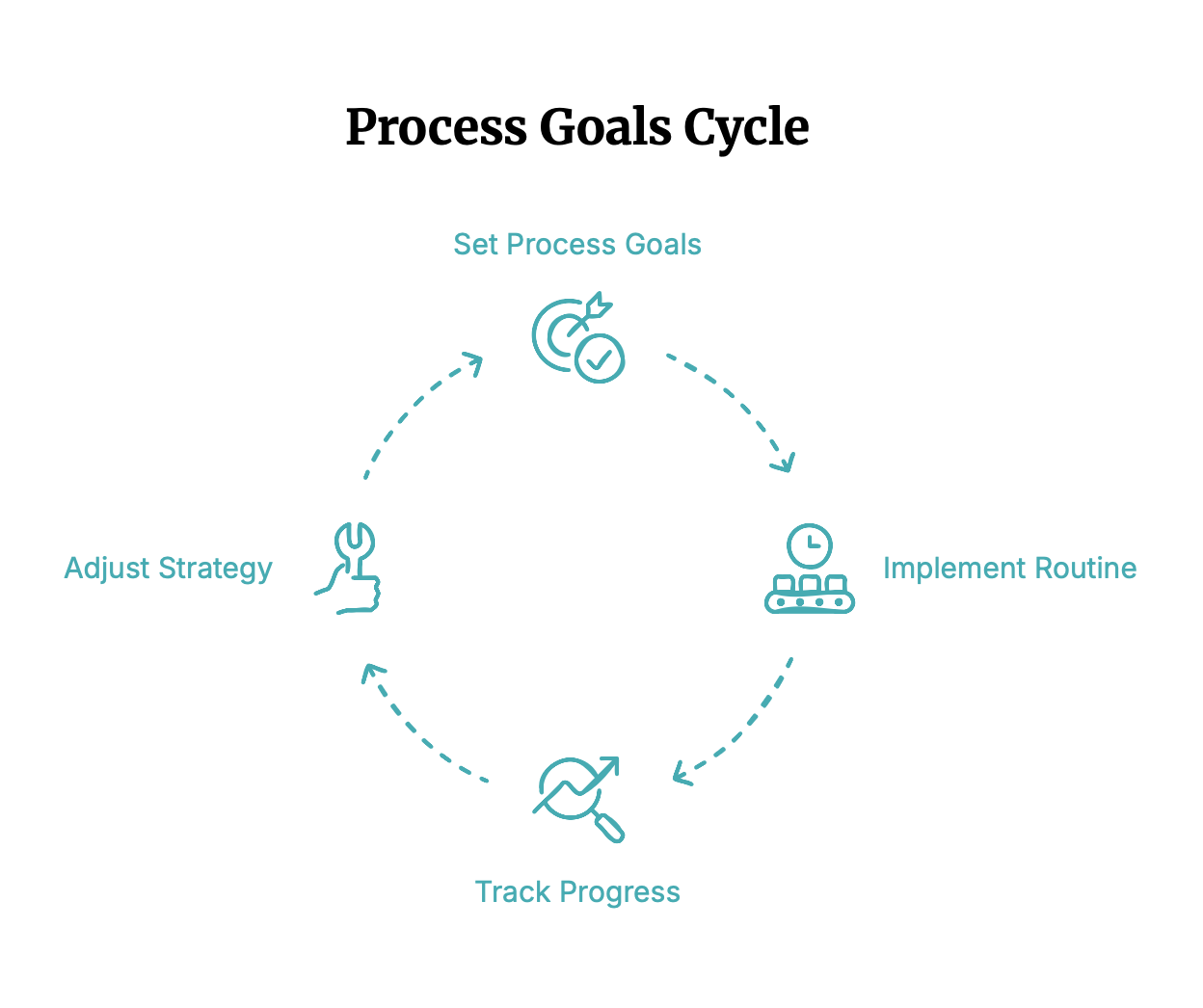
Putting process goals into practice
Example from a current project: Last week, I was put in charge of a three-year project with a €500,000 budget.
It involves research, tool implementation, and collaboration among several people. Outcome goals alone would be abstract and of little help.
Instead, we defined specific process goals:
This approach ensures trackable, visible, and reliable progress – regardless of how many iterations or setbacks the research involves.
Establish routines and secure fixed time blocks
To make process goals effective, it is crucial to block out fixed working hours:
Example: 1 hour per day → 5 hours per week → 20 hours per month → tangible progress
Combine flexibility
Research is unpredictable. Therefore, process goals should remain flexible:
- Adapt routines to current project needs
- Add short sessions when needed
- Outcome goals provide direction; the focus remains on controllable processes
Conclusion
Long-term research becomes manageable when you:
This approach reduces stress, increases the reliability of progress, and makes large projects manageable – without unrealistic expectations of results.