
Boosting Your Early Scientific Impact Metrics
The early bird catches the worm
I’d like to introduce you to a strategy you can use if, as a master’s student, doctoral researcher, or even bachelor’s student aspiring to an academic or research career, you want to increase your research impact at these early stages.
For anyone pursuing an academic career, it is important to build an academic profile as early as possible. There are significant advantages to getting into the game early. I compare this to the concept of compound interest. When you publish something, it will eventually be cited by someone else (and by you, too). The higher this value grows, the more likely it is that it will be published or cited by someone else. Essentially, the longer you wait, the longer a paper has been published, the greater the likelihood that it will be cited. That is the simple calculation behind it.
There are significant advantages to getting involved early.
How to accelerate your visibility and academic career
There is an entire movement called “Open Science” whose goal is to do good in various ways. The idea is that the scientific process should be transparent, not just the outcome, such as the published paper.
In line with the principles of open science, I suggest that whenever you write something—even if it is just a project involving a conference presentation—you should always publish it in a repository. The Open Science Framework, for example, is my preferred platform for publishing early-stage research and, of course, the data supporting the process. When you put your work online, the Open Science Framework provides you with a unique identifier that you can use and that can also be cited.

The process
When you publish another conference presentation, you can refer back to your previous work. While this may not immediately attract a great deal of attention, it gives you a solid foundation for further citations. This becomes especially important when you publish what is, so to speak, your final masterpiece. Suppose you publish your work on a study and have two or three conference presentations that you previously published in the Open Science Framework. Once your paper has been published, you can merge it with your earlier research results on Google Scholar, which I consider the most transparent platform for measuring scholarly impact. All the citations you received from the individual sources will be combined. If one paper contains all three research findings, it counts as only one. Nevertheless, it helps to start with a research publication that already has at least a handful of citations. That is great, because those first citations are often the hardest to get.
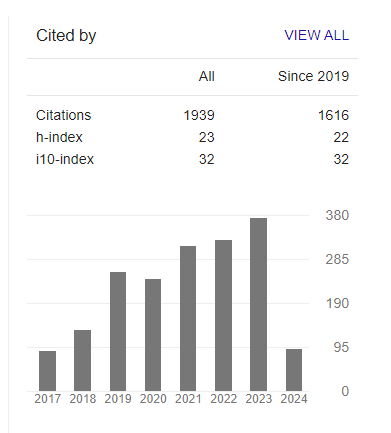
Let’s briefly look at what the outcome will be: The outcome will be greater speed, because you will get your citations faster. Once your work has been published, you may already have some citations. That is not usually the case. If you publish in a journal, it often takes a few months after acceptance before it is actually published. Once it is published, someone has to find the paper, download it, read it, and cite it in another paper. That paper then has to be published before you receive recognition for it. This is a very long process that takes years, not months.

Coaching für deine akademische Karriere
Ich bin darauf spezialisiert, Menschen auf ihrem Weg durch die akademische Welt persönlich zu unterstützen und strategisch zu beraten. Meine Aufgabe ist es, dir dabei zu helfen, dich durch die Komplexität der akademischen Laufbahn zu navigieren und deine Ziele in Erfolge zu verwandeln.
How publication lag in academic publishing works against you
You want to speed up this process, because time is especially critical at the beginning of your academic career. Your PhD takes only about three to four years—perhaps even less. I, for example, completed my PhD in just two years. So how many citations can you accumulate in two or four years? Not many. But you will need those citations when you apply for a position. This time lag is a real disadvantage for your career development.
Be smart and adopt this practice, which, as I said, is not only good for you because it helps you develop your academic career, but also good for science because it follows the principles of open science.