
Writing a funding proposal strengthens your dissertation
There is a common assumption among PhD candidates that applying for research funding is a high-stakes gamble.
You invest significant time. The success rate is uncertain. And if the application fails, it can feel like wasted effort.
That assumption is wrong and it is costing researchers a significant strategic advantage.
In this post, I want to reframe how PhD candidates think about funding proposals — not as a lottery, but as one of the most reliable investments you can make in your dissertation and your academic career.
Why Most PhD Candidates Avoid Funding Applications
The reluctance is understandable. Writing a serious proposal for a PhD scholarship or academic grant takes time away from the dissertation itself.
The process is demanding. The bureaucracy is real. And the outcome is uncertain.
But this calculation misses something fundamental: the proposal process itself is the return.
Regardless of the funding decision, what you build during the application — in terms of research clarity, stakeholder relationships, and methodological rigour — directly strengthens your dissertation.
What the Proposal Process Forces You to Do
A well-constructed funding proposal requires you to do something that many PhD candidates postpone for too long:
Articulate your research clearly enough that serious external stakeholders are willing to support it.
This is not a small thing.
It means your research design must be coherent, your methodology defensible, and your contribution to the field legible to people outside your immediate supervisory relationship.
That process of external scrutiny and even in preparation for it sharpens the dissertation in ways that internal feedback rarely does.
The Network Is the Real Asset
Here is what I tell every PhD candidate I work with who is considering a funding application:
Even if the proposal is rejected, the network you build in preparing it is not.
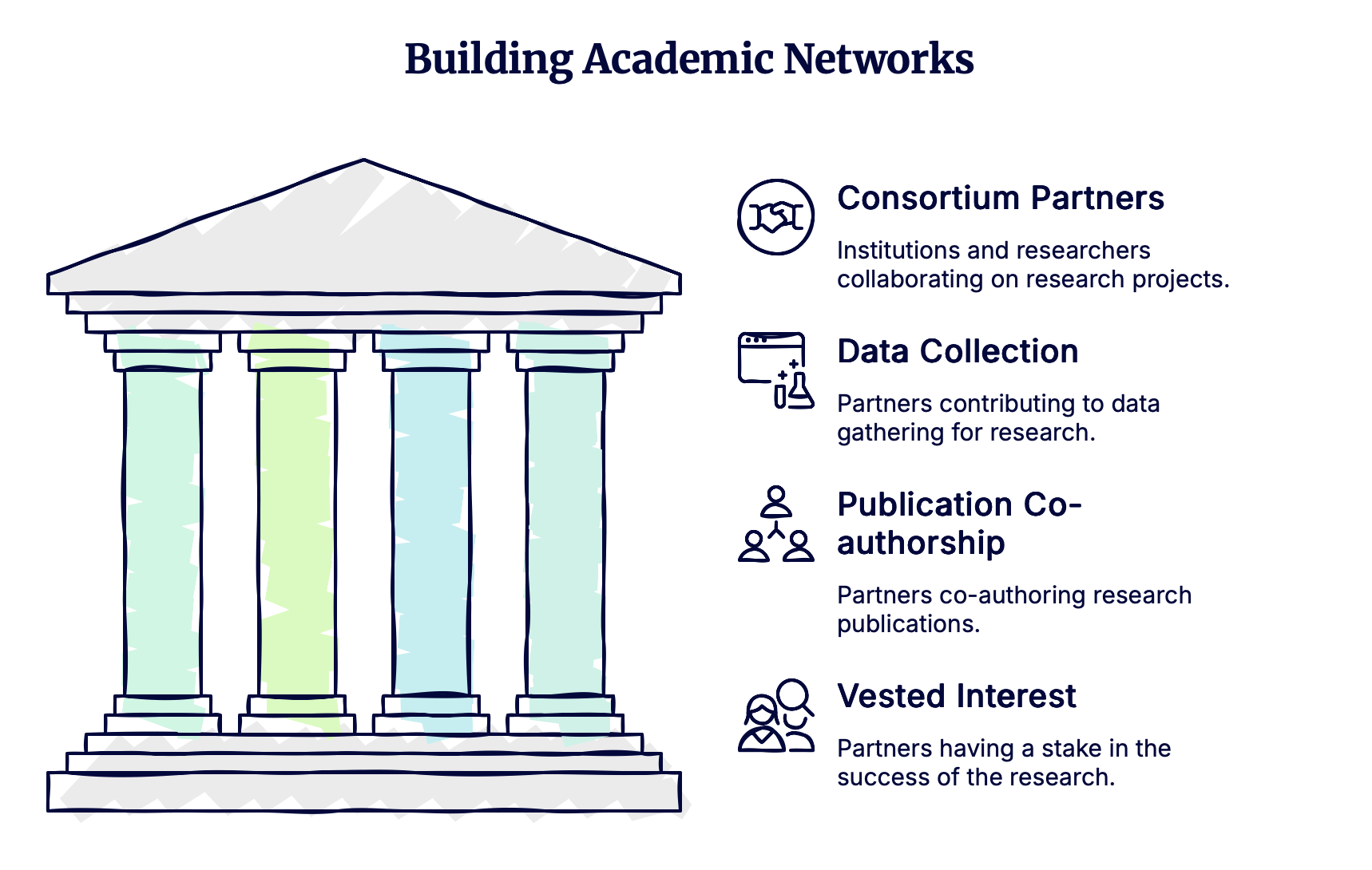
A mid-scale or large-scale research project brings together consortium partners — institutions, researchers, and organisations with a shared investment in the work.
These partners agree to collaborate, contribute to data collection, and co-author publications.
They have a vested interest in your research succeeding. And that interest does not expire when a funding decision comes back negative.
The collaborative relationships formed during a proposal process are among the most durable and valuable assets in an academic career.
PhD Grants and the Dissertation: A Direct Connection
There is a dimension of PhD funding that goes beyond career strategy — it directly affects the quality of the research itself.
A funded project, or a seriously proposed one, typically enables data collection across multiple sites, countries, or languages.
This creates methodological advantages that are difficult to achieve in a solo dissertation:
Triangulation across different contexts. Comparative analysis across national or linguistic boundaries. Redundancy in data collection — if one site encounters problems, others remain viable.
The dissertation that emerges from this kind of structure is measurably stronger.
And the cost to consortium partners is relatively low. They participate because they gain co-authorship credits and academic recognition in return.
How to Approach a Funding Application Strategically
Most PhD candidates approach funding applications reactively — they apply when an opportunity appears, under time pressure, without a clear sense of what they are trying to build.
A more effective approach is the opposite. Start with the dissertation, not the funding call.
Ask yourself: what does my research need to become stronger?
More data. More reach. More methodological diversity. More credibility with external stakeholders.
Then look for funding opportunities that create exactly those conditions.
The proposal becomes a tool for dissertation development — not a distraction from it.
This shift in perspective changes how you write the proposal, how you select consortium partners, and how you measure success at the end of the process.
The Competence You Build Is Yours to Keep
There is one more dimension worth naming directly. The skills developed through a serious funding application are transferable and permanent.
Framing complex research for non-specialist audiences. Navigating institutional timelines and bureaucratic processes. Building coalitions of stakeholders around a shared research agenda.
These are not peripheral academic skills. They are central to a sustainable academic career — and they are precisely what distinguishes candidates who progress from those who stall.
A PhD candidate who has written a serious funding proposal — regardless of outcome — has demonstrated something meaningful: the ability to operate at the level where academic careers are actually built.
That competence does not expire. It compounds.