
A reflective guide to critical thinking in academia
Academic life is full of well-meaning advice. Some of it is thoughtful. Some of it is comforting.
And some of it — like the popular saying “How you do one thing is how you do everything” — collapses the moment you examine it closely.
For PhD candidates and postdocs who seek clarity and stability in a complex academic system, such maxims can feel reductive. This article uses this saying as a case study to show why critical thinking in academia is essential — not only in research, but also when navigating your identity and decisions.
You will see why context matters, why humans are not static, and how a reflective approach protects you from oversimplified advice.
Why Simplified Advice Is Problematic in Academia
Simple maxims offer a sense of order. They claim to reveal a deeper truth about who you “really” are.
But academic work unfolds across multiple roles, multiple expectations, and multiple time horizons. You write, teach, review, collaborate, supervise, analyze, and reflect — often in the same week.
The idea that there is a single “general way” you do things is incompatible with this variety.
If a saying claims to describe your whole identity in one sentence, it is almost certainly missing context.
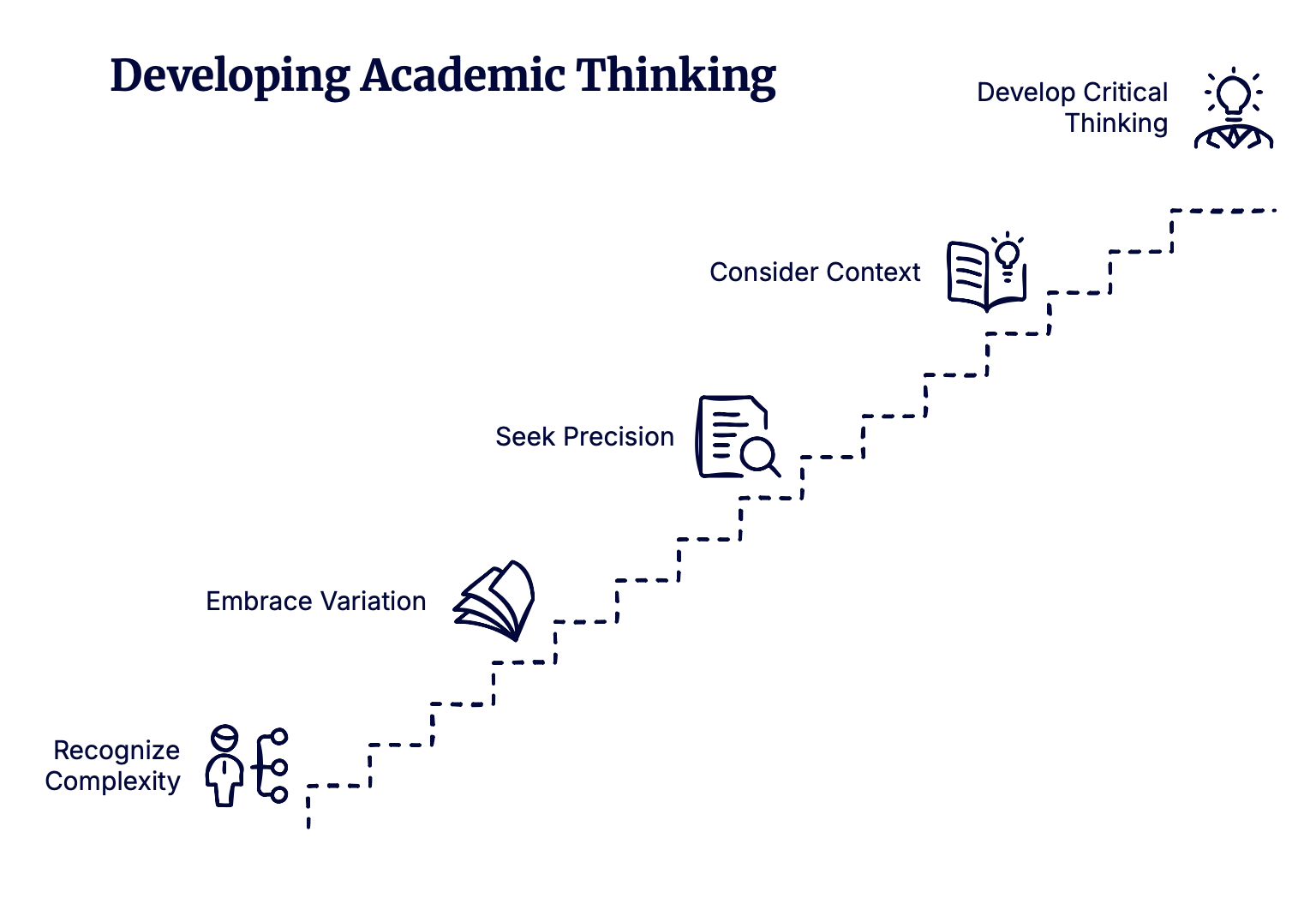
This is where academic thinking and the broader practice of academic thinking and writing become essential. Precision matters. Context matters. Variation matters.
Why Behavior in Academia Is Always Context-Dependent
Your original reflection makes a crucial point: We do not act “in general.” We act in situations. These situations differ in:
You may be structured in grant writing, exploratory in a workshop, calm in advising a student, and intense when preparing a job talk.
This is not inconsistency. This is adaptation — a sign of competence and awareness.
If you review only the past week, you will likely find hundreds of examples where your actions do not follow a single pattern. That alone falsifies the maxim.
The Trivial Case Where the Saying Is Technically True
There is one scenario where the maxim holds — but it is trivial:
In a single moment, “one thing” is indeed “everything you’re doing at that moment.”
But this observation explains nothing about personality, motivation, or academic identity. It carries no actionable insight.
For early-career researchers seeking clarity, such trivial truths can be misleading. They appear profound but do not offer meaningful guidance.
Why Is Critical Thinking Important in Academia?
Researchers are trained to question assumptions and examine evidence.
Yet outside formal research work, many accept oversimplified explanations about productivity or behavior.
This is exactly where the question “why is critical thinking important in academia?” becomes practical.
Critical thinking protects you from:
and supports:
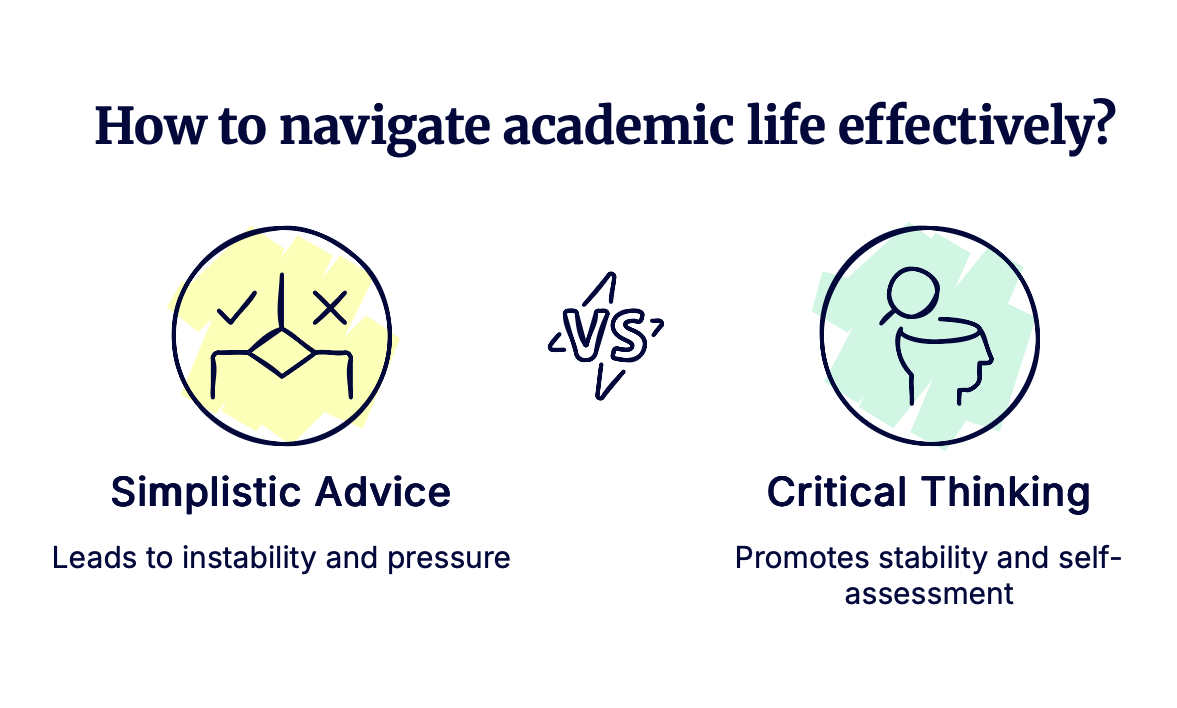
Academic systems are already inherently unstable. Simplistic advice should not add to that instability.
Applying Critical Thinking in Academic Contexts
The phrase applying critical thinking in academic context often sounds abstract. Here is a more practical way to engage with it whenever a maxim feels too neat:
1. Identify the scope: Is this advice about writing, motivation, or your entire identity?
2. Look for counterexamples: If a saying cannot withstand five minutes of reflection, it is not a robust principle.
3. Ask what complexity it hides: What emotional, structural, or interpersonal factors are missing?
4. Recognize adaptive behavior: Variation across contexts is a strength, not a flaw.
5. Translate the advice: Extract the small insight — if there is one — and discard the generalization.
This is also what strengthens academic thinking and writing: precise language, contextual awareness, controlled generalization.
What Is Critical Thinking in Academia, Really?
Critical thinking is not negativity or contrarianism. It is a structured way of engaging with claims by:
For academics, this practice isn’t optional, but foundational. It keeps your thinking precise and your identity grounded, especially in environments full of shifting expectations.
Moving Beyond Simplistic Maxims
Your argument highlights something deeply relevant for researchers: academic identity is dynamic. You grow, adapt, and respond to context. No one-sentence maxim can capture this reality.
Instead of relying on generic slogans, you can use critical thinking as a more reliable guide. It allows you to navigate your career with clarity, autonomy, and a realistic understanding of yourself.
This is why the importance of critical thinking in academia extends far beyond scholarship. It safeguards your decision-making in a system that rarely provides certainty.
Conclusion
“How you do one thing is how you do everything” fails because it ignores the complexity of academic life.
By applying critical thinking in academia — not only to research but also to the advice you receive — you gain a more stable and autonomous way of navigating your career.
You deserve a narrative about your academic identity that is more nuanced than any slogan.
Good Luck!