
Academic writing is often thought of as simply sitting down to draft or edit a manuscript. However, academic writing encompasses a much broader range of activities.
It includes not only editing, but also drafting, data analysis, brainstorming, and discussions with colleagues.
In this article, you will learn what academic writing truly involves, how to identify the essential sub-activities for your projects, and how to structure your day for maximum productivity.
Understanding these nuances is crucial before attempting to schedule writing time effectively. Without this clarity, even well-intentioned planning can lead to frustration, inefficiency, and wasted effort.
The Broad Meaning of Academic Writing
Many researchers define writing narrowly, focusing only on producing text. Yet, writing can include:
Each sub-activity has unique requirements in terms of attention, creativity, and focus. Recognizing the type of writing you are doing is the first step toward sustainable productivity.
By broadening your definition of writing, you can better allocate energy, time, and mental resources to each task, reducing stress and improving output quality.
Why Understanding Sub-Activities Matters
Jumping straight into scheduling without analyzing the type of work can reduce efficiency.
For example, data analysis requires logical focus, whereas brainstorming requires creative thinking. Scheduling these at inappropriate times can lead to frustration or wasted effort.
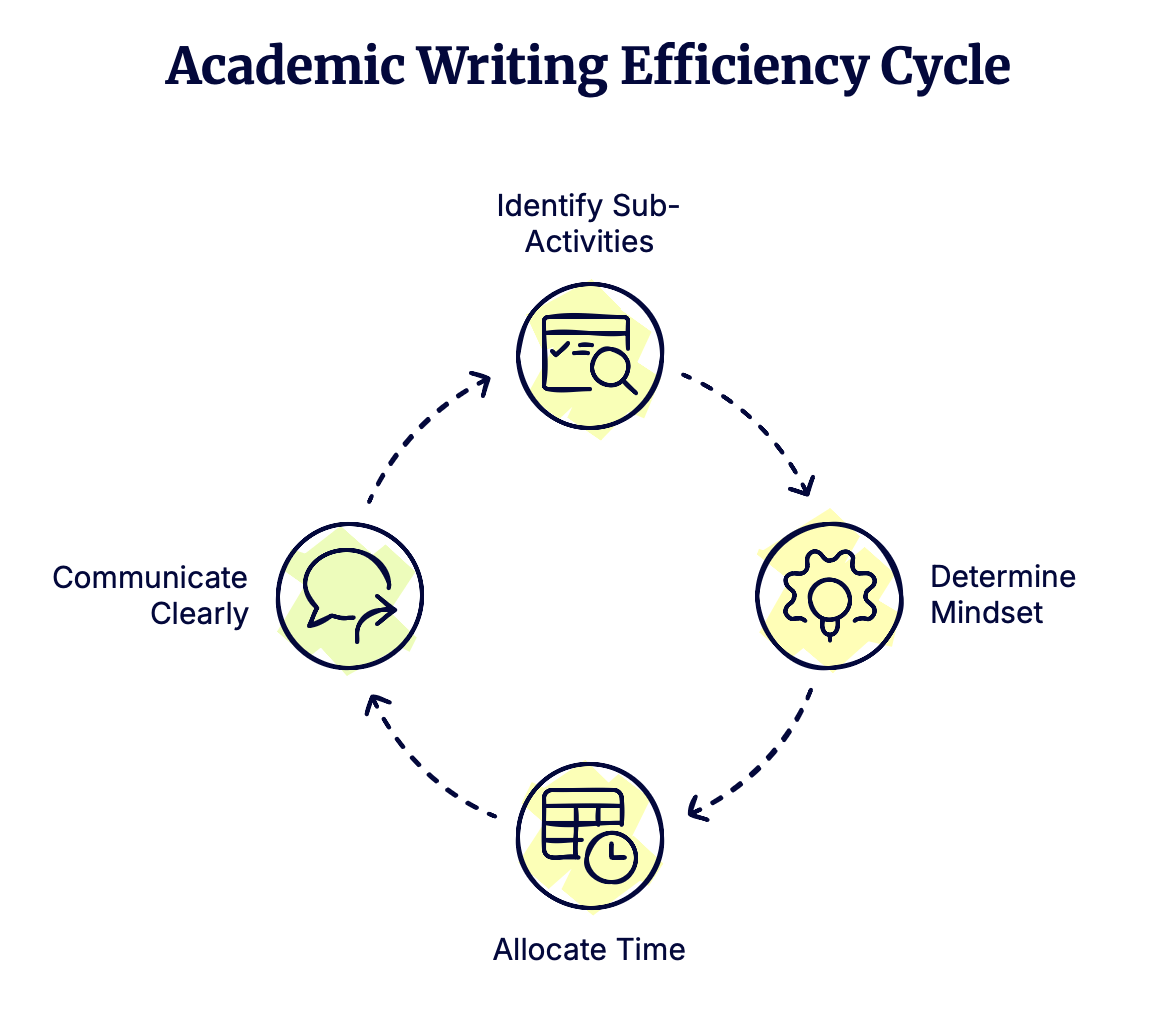
To plan effectively, first identify the essential sub-activities for your project and determine the mindset needed for each.
Only then can you allocate your writing time meaningfully. This ensures you work on tasks when you are most productive.
Additionally, understanding sub-activities helps you communicate your work clearly to supervisors, collaborators, or students who might have a narrow view of what “writing” actually entails.
Academic writing is often undervalued as a multifaceted skill, and recognizing its diversity strengthens your professional approach.
Aligning Your Day for Academic Writing
Once you understand the sub-activities:
This approach ensures that your writing sessions are purposeful and productive.
Over time, this method can help build a consistent and sustainable writing routine, which is key for long-term academic success.
By integrating these steps, you not only improve productivity but also reduce anxiety around writing and create a clear, intentional workflow for every project.
Practical Example: Planning a Writing Day
Imagine you have a research paper to draft.
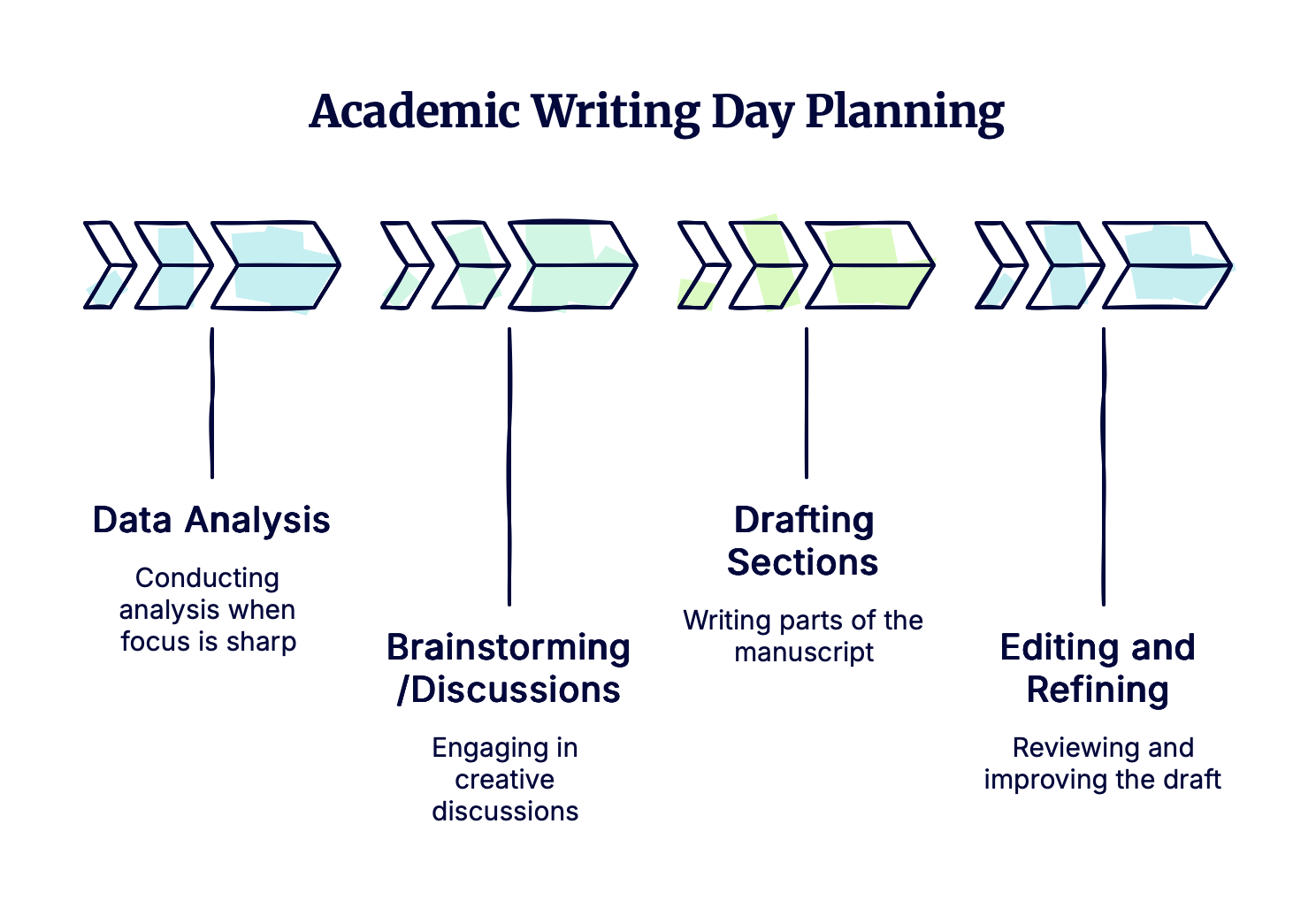
You might start your morning with data analysis, when your focus is sharp.
Midday could be reserved for brainstorming or discussions with colleagues, leveraging a creative mindset.
The afternoon may then be used for drafting sections of your manuscript, followed by a short session of editing and refining.
By consciously aligning tasks with your natural energy patterns, you ensure each activity receives the attention it requires.
Over time, this practice can significantly increase writing efficiency and reduce the common stress associated with academic deadlines.
Conclusion: Reflect Before You Schedule
Academic writing is not just about putting words on paper.
It is a multifaceted process that includes preparation, analysis, discussion, and drafting.
Taking the time to understand what writing truly means for each project allows PhDs and postdocs to plan their day effectively, respect their energy patterns, and maintain a sustainable, productive workflow.
Now it’s your turn!