
In academic work, achieving meaningful research progress is rarely about raw ability. PhD candidates often feel stuck, unsure whether to push forward or pause for reflection.
Yet, research shows that consistent, thoughtful effort—using the time and resources you have—often drives more progress in research than bursts of strength or talent alone.
This article explores how to structure your work and mindset to support long-term, sustainable research progress for PhD candidates, students, and other academics alike.
Rethinking Strength in Academic Work
Many early-career researchers assume that success requires extraordinary talent, stamina, or influence. While these can help, they are neither sufficient nor necessary.
Progress often comes from how effectively you use the time and opportunities available. Small, repeated actions like reading one paper a day, dedicating a focused hour to writing, or checking in with colleagues, accumulate over months and years.
This is the essence of process-oriented work: controlling what you can control rather than chasing outcomes you cannot predict.
Reflection vs. Persistence
Reflection is essential, but it can also slow you down.
Academic work frequently presents ambiguous choices. Which projects deserve attention, which methods are promising, and which directions are worth pursuing?
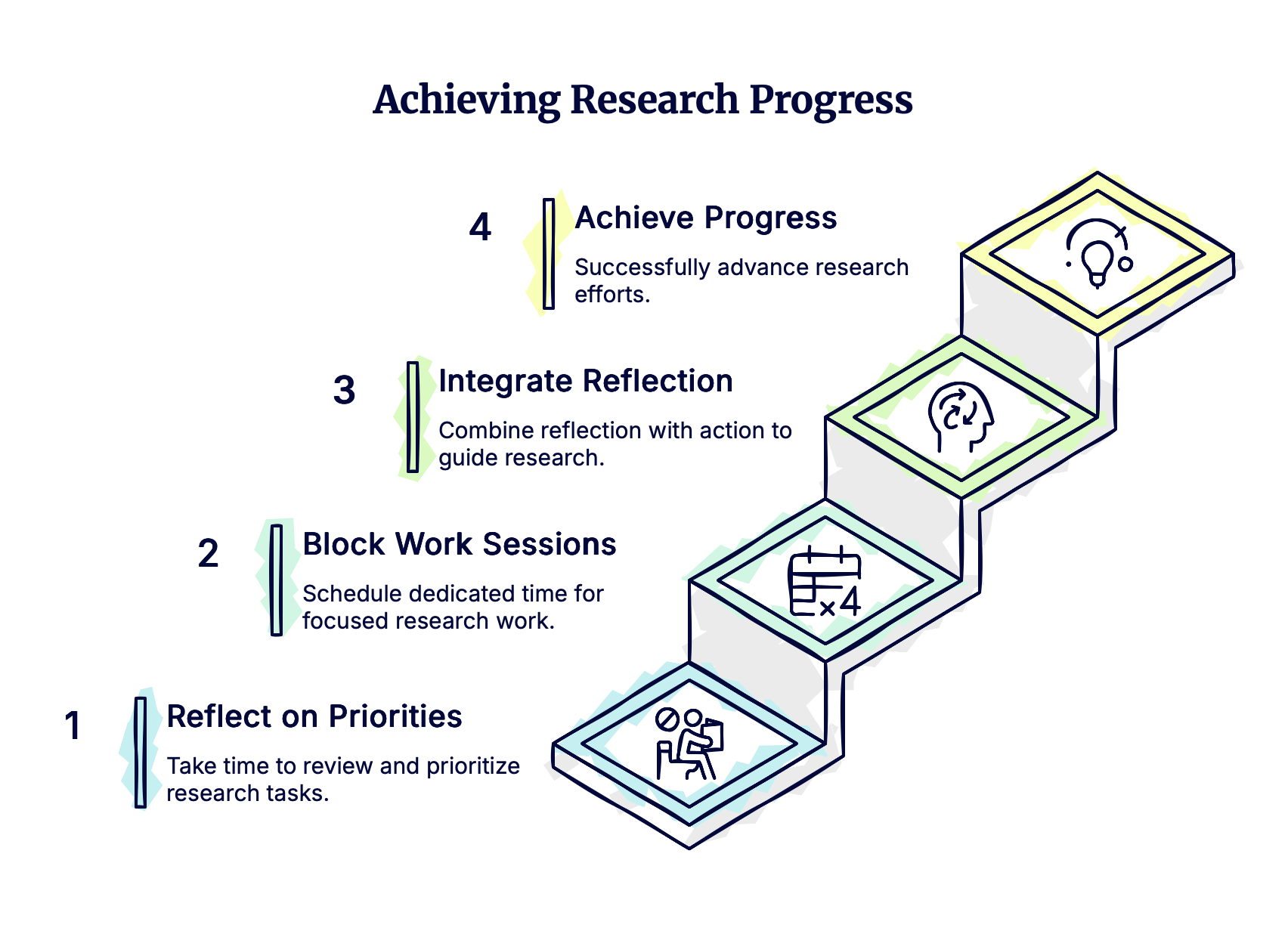
The key is to integrate short, structured reflection with persistent action.
For example, setting aside 15 minutes at the start of each week to review priorities, then blocking dedicated work sessions, ensures that reflection informs research progress rather than stalls it.
Using Available Possibilities
Your most reliable “power” in academia often comes not from influence or strength but from recognizing and leveraging possibilities:
These possibilities may seem modest, but effective long-term research progress relies on compounding small efforts consistently.
Staying Motivated Without Overexertion
Academic work is a marathon, not a sprint. Avoid equating long hours with productivity. Instead:
- Set realistic process goals.
- Celebrate incremental achievements.
- Keep a visible record of your consistent work to reinforce momentum.
Even modest contributions compound: a single hour of focused work each day can yield a manuscript, grant progress, or new data insights over months, making research progress tangible.
Conclusion
Achieving sustainable research progress depends less on raw strength and more on how you structure effort over time.
Key strategies include:
- Prioritize process goals and manageable actions.
- Combine reflection with deliberate, repeated effort.
- Recognize and use the possibilities available to you — time, collaboration, and small wins.
- Maintain consistency, rather than chasing immediate results.
By focusing on steady, thoughtful effort you can make reliable progress in research, turning incremental actions into meaningful outcomes over time.
Good luck!