
Writing an introduction academic paper can feel daunting. Reviewers often judge a manuscript’s clarity and rigor from the first few paragraphs, and a poorly structured introduction can slow down acceptance.
Yet, there is a simple, reproducible system that consistently works for PhD candidates and early-career researchers: a four-paragraph framework following a logical academic paper introduction structure.
This article explains how to use it to save time, improve clarity, and align with standard academic expectations.
Why Structure Matters in an Introduction Academic Paper
Before diving into the specifics of the four-paragraph approach, it helps to consider the common challenges faced when writing an introduction academic paper.
Many early-career researchers struggle with where to start, how much context to provide, and how to balance general relevance with the specific research question.
Without a clear structure, introductions can feel scattered, reviewers may lose track of your rationale, and the significance of your study can be obscured.
The framework that follows provides a reliable academic paper introduction structure, guiding you step by step from broad relevance to your research question and planned approach, while keeping your writing focused and reviewer-ready.
Paragraph 1 – Establish High-Level Relevance
Begin by explaining why your research topic matters in a broader context. You are not yet focusing on the technical details of your study; instead, highlight the significance of the problem in the real world.
This paragraph signals to reviewers that your research addresses a meaningful and timely problem.
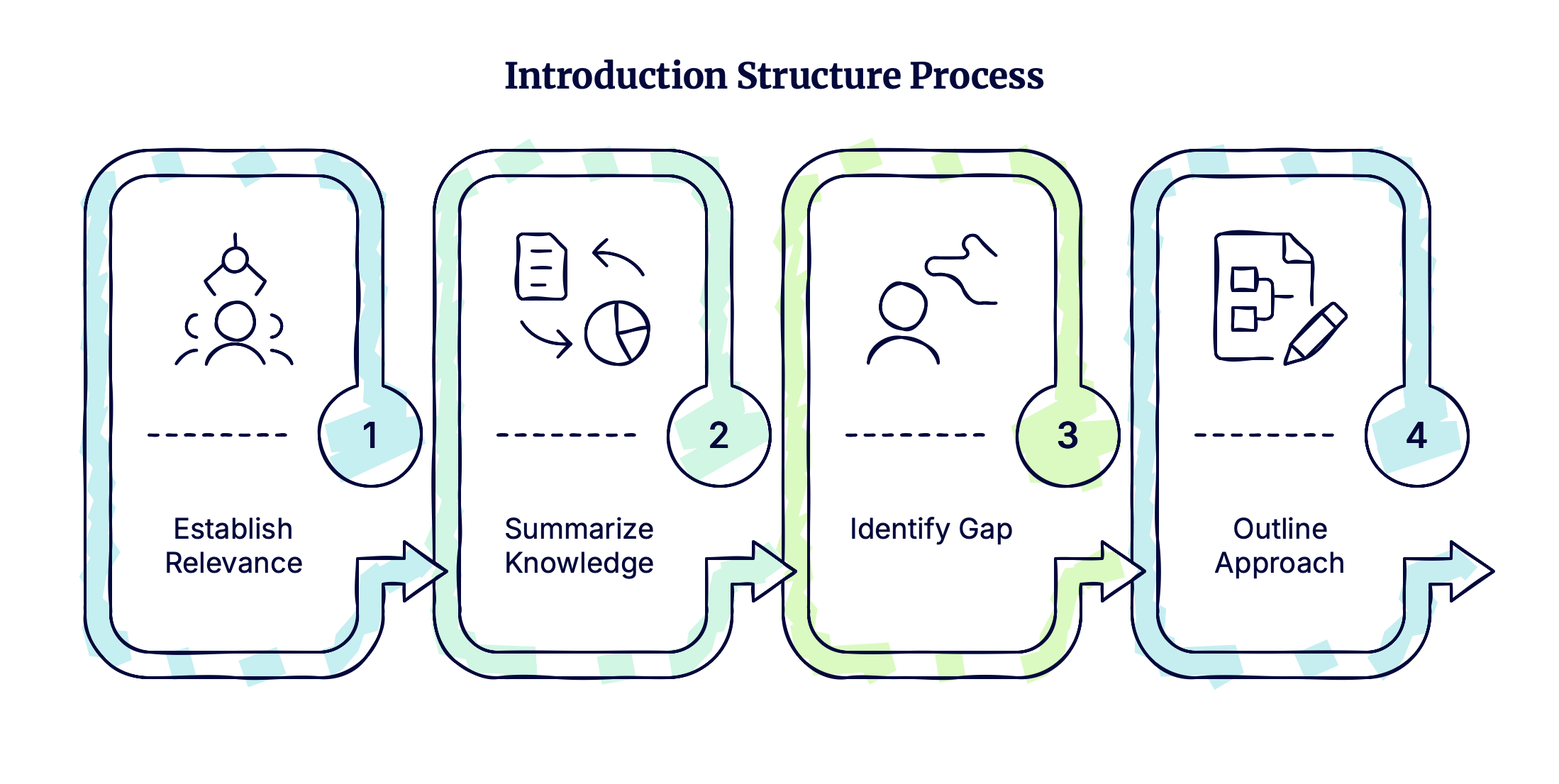
Paragraph 2 – Summarize Existing Knowledge
Next, provide a concise overview of what is already known about the problem. This functions as a mini-theoretical background or literature review:
This paragraph ensures your academic paper introduction structure shows awareness of existing research and positions your work within the academic conversation.
Paragraph 3 – Identify the Gap and Pose Your Research Question
The third paragraph is crucial. Here you:
By explicitly linking your question to the gap, you make it clear to reviewers why your study is necessary and original. This is the heart of a strong introduction.
Paragraph 4 – Outline Your Approach
Finally, briefly explain how you will address your research question:
Think of this as your roadmap for the reader. Clarifying how your study will contribute to knowledge and why your approach is credible.
Conclusion
A strong introduction academic paper guides the reader from broad relevance to your specific research question and planned approach. Using this four-paragraph framework ensures:
Following this system guarantees a clear, structured academic paper introduction structure, improving reviewer readiness and supporting effective research writing.
Good luck!