
Long-term research projects can feel overwhelming. No matter how far ahead a deadline is, work often piles up until the last minute.
This isn’t a lack of motivation, but the complexity of academic work.
In this article, I explain how focusing on process goals rather than outcome goals can help you achieve continuous progress, even in multi-year projects.
The Difference Between Process and Outcome Goals
Many researchers plan exclusively around outcome goals — like submitting a paper in three months. These are lag indicators: they only show progress after the fact.
In practice, this rarely works, because research rarely follows a linear path.
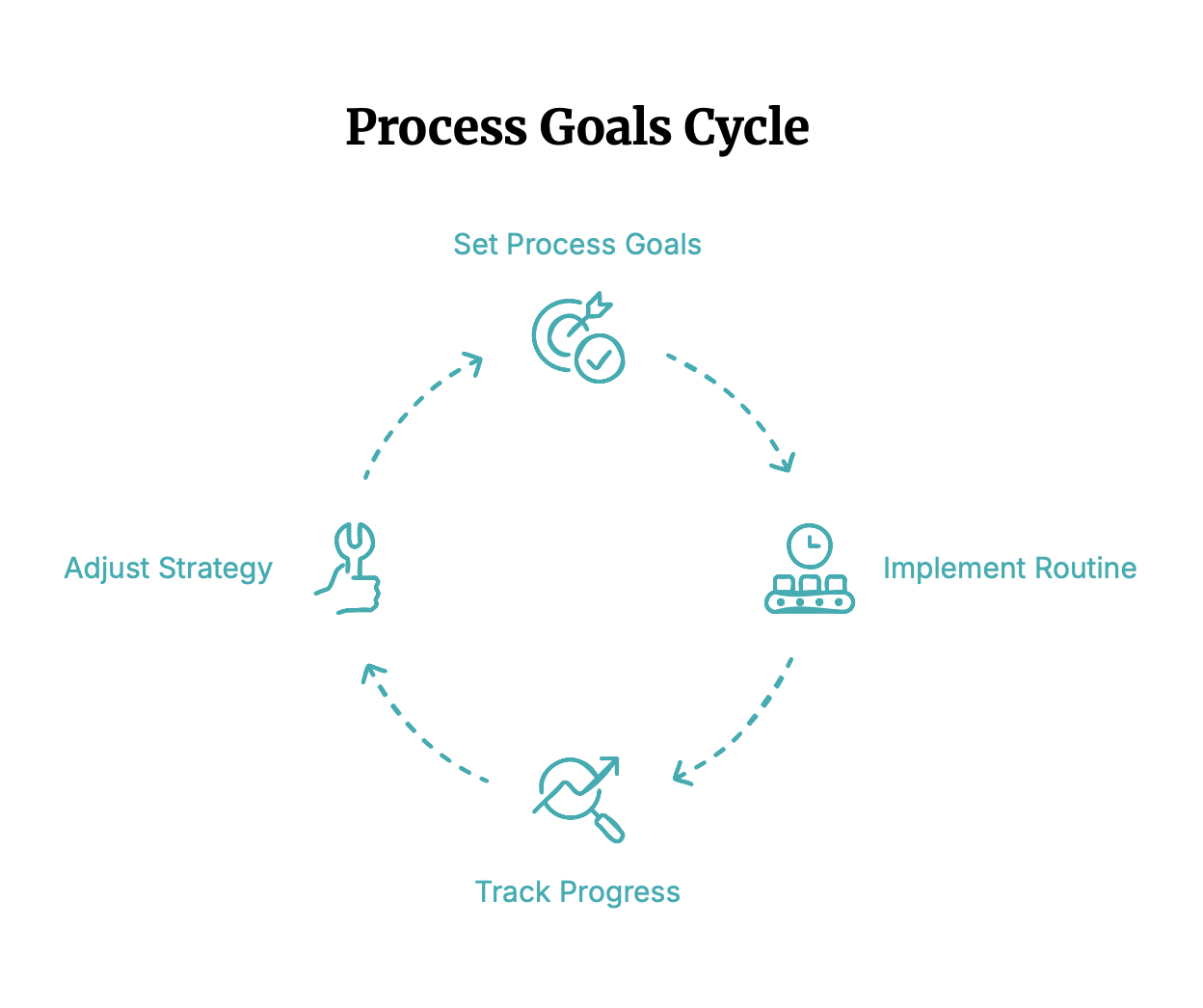
Process goals, by contrast, are lead indicators: they control the steps that directly drive progress, independent of the final result.
For example: dedicating one focused hour each day to writing. This creates a reliable routine that keeps your project moving forward in a controllable way.
Implementing Process Goals in Practice
Here’s an example from a current project: last week, I was awarded the leadership of a three-year project with a 500,000 € budget.
It includes research, tool implementation, and collaboration with multiple people. Outcome goals alone would be abstract and not very helpful.
Instead, we defined concrete process goals:
This approach ensures controllable, visible, and reliable progress, regardless of how many iterations or setbacks the research may involve.
Creating Routines and Securing Time Blocks
To make process goals effective, it’s crucial to block dedicated time:
Example: 1 hour per day → 5 hours per week → 20 hours per month → measurable progress.
Combining with Flexibility
Research is unpredictable. Therefore, process goals should remain flexible:
- Adjust routines based on current project needs.
- Add short sessions if required
- Outcome goals provide orientation, but the focus remains on controllable processes.
Conclusion
Effective long-term research becomes manageable when you:
This approach reduces stress, increases the reliability of progress, and makes large projects manageable without unrealistic expectations about outcomes.
Good luck!